
The Telecommunications Engineering Section comprises 5 areas of work, whose professors are dedicated to the training of professionals and research in:
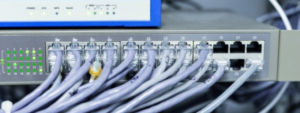
This area covers topics related to existing network architectures, protocols and the computer programs that allow them to be implemented, and the processes of design, development and implementation of telecommunications networks and services. It groups courses related to network architecture, internet protocols, software-defined networks, structured cabling, IP telephony, cloud networks, high-speed networks, unified networks and network management.

This area will deal with topics related to wireless communications, covering the spectrum of satellite communications, radars, microwaves, WiFi networks, sensor networks, mobile networks, antenna design and transmission lines, among others.
It groups courses related to wireless communications, satellite communications, radars, microwaves, WiFi networks, mobile networks, antenna design, transmission lines and optical communications.

Software is a fundamental part of today's telecommunications systems, since it represents the applications that work on the telecommunications infrastructure we use (including APPS) and considers the software dedicated to the management of communication in the network, applied information systems and the software tools in the equipment that make possible the realization of communication links. The Flexible Technologies area is in charge of training and research on these topics. It groups courses related to the architecture of information and communication technologies, design and development of web applications for telecommunications, database server management, web services and construction of mobile applications.

This area is related to the formation of knowledge of circuits related to the design of transmission and reception equipment, as well as the capture, understanding and processing of voice, data and video signals that represent the contents transmitted in communication networks.
It groups courses related to telecommunications traffic modeling and optimization tools, analog and digital communications theory, modulation schemes, digital signal processing, cybersecurity, ethical hacking, perimeter network protection equipment and software, and forensic telematics.

It groups courses related to the formulation and evaluation of telecommunications projects, management and direction of telecommunications companies, telecommunications infrastructure, thesis work and development of pre-professional supervised practice.