
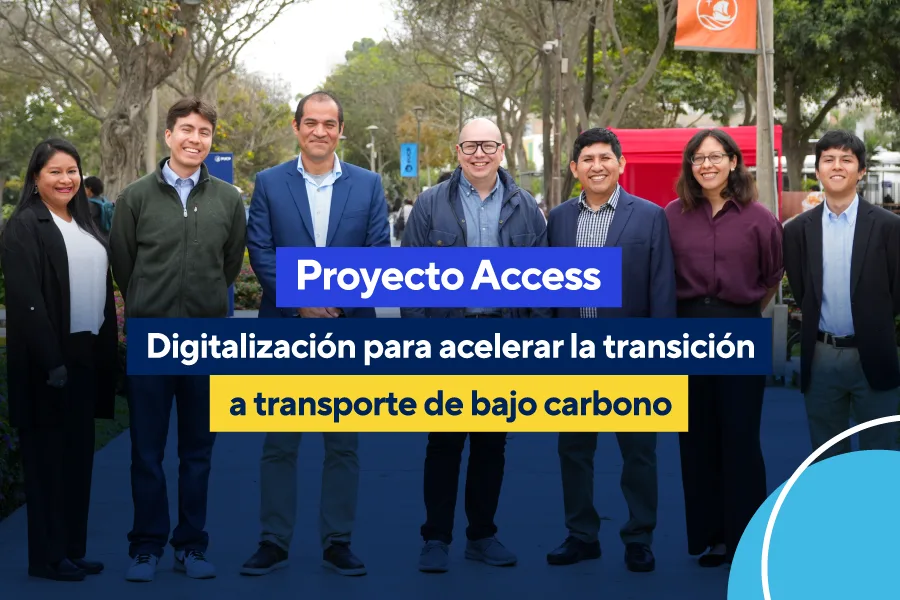
Nine leading global organizations have joined forces to launch ACCESS (Accelerating Access to Low-Carbon Urban Mobility Solutions through Digitization), an ambitious joint program that seeks to transform urban mobility in six Latin American countries (Argentina, Brazil, Colombia, Ecuador, Mexico and Peru). With a planned implementation between 2025 and 2026, ACCESS proposes to generate an immediate and lasting impact through a comprehensive approach to the digitization of transportation.
A Collaborative Effort for Sustainability
The mission of this project is to measurably reduce greenhouse gas (GHG) emissions from the transportation sector, which currently contributes 35% in the region. It is expected that by 2029, further digitization of urban transport will accelerate the implementation of prevention, change and improvement strategies that enable better implementation and transition to low-carbon modes of transport to measurably reduce GHG emissions and pollution, compared to the BAU scenario.
The Ministry of the Environment (MINAM) is leading the national strategy to mitigate GHG emissions, in collaboration with the Ministry of Transport and the Ministry of Energy. At the local level, the Urban Transport Authority (ATU) is partnering with the authorities of Lima and Callao to promote the digitalization of transport.
Within the framework of this program, a few weeks ago we received Luis Felipe Quirama Londoño, Programme Management Officer of the UN Environment Programme in charge of monitoring the progress of the project in Colombia and Peru. His visit was also an opportunity for him to meet with government actors involved in the development of the project.
Quirama met with the PUCP Engineering team in charge of executing the pilots of this project, which is led by Professor Julio Cuisano. Currently, the team formed by PUCP mechanical and civil engineers is developing two pilots, one for the city of Lima and the other for Arequipa. The aim is to test the change in transportation technology by switching from fossil fuel buses to electric buses.
As a result of the pilot that is being carried out related to the platform for recording performance indicators when comparing both types of buses, by 2027 it will be possible to propose evidence-based policies and standards to promote electromobility at the local level. By 2028 it will be at the national level and by 2029 at the regional level. ACCESS undoubtedly represents a crucial step towards building smarter, more efficient and sustainable cities in Latin America, laying the foundations for a future with lower emissions and greater urban wellbeing.
The PUCP team is formed by: Julio Cuisano, Fiorella Aranda, Alexander Muñoz, Alejandro Chire and Alonso Mendoza.
Comments